Agents & automation
Shoppers will let AI fill the cart, but not press buy
DoorDash's own figures and an Accenture survey point to the same design goal: an agent that does the work up to checkout and then makes the final review fast.
DoorDash’s AI shopping assistant now builds grocery baskets 50% bigger than non-AI orders. In June it was 35%. That is a good number, but another number from the same conference matters more for anyone designing an agent.
The DoorDash figures
At Groceryshop in Las Vegas, DoorDash co-founder Andy Fang shared how Ask DoorDash has moved since its June launch:
- Basket size: 35% larger than non-AI orders at launch, 50% larger now.
- Checkout: 3 times faster at launch, 5 times faster now.
- Shoppers who use it buy 60% more unique products.
These are DoorDash’s own figures from a conference talk, not an audited study. I would not rely on them as evidence of effect. Still, it is rare to see an AI shopping tool report a second set of numbers, and these went up. A tool that is getting worse usually stops reporting.
The number that matters more
Accenture research presented at the same event found that 74% of consumers said they would let an AI agent take a job off their hands. Only 9% would let one fill the basket and pay, with no say from them at the end.
Fang made the same point on stage: it is “ultimately the consumer” who makes the final call.
I read the two figures together as a gap between delegating a task and delegating a decision. People are comfortable saying “sort out my groceries”. They are far less comfortable with “spend my money without asking me”. The first is a chore handed over. The second is authority handed over.
My read
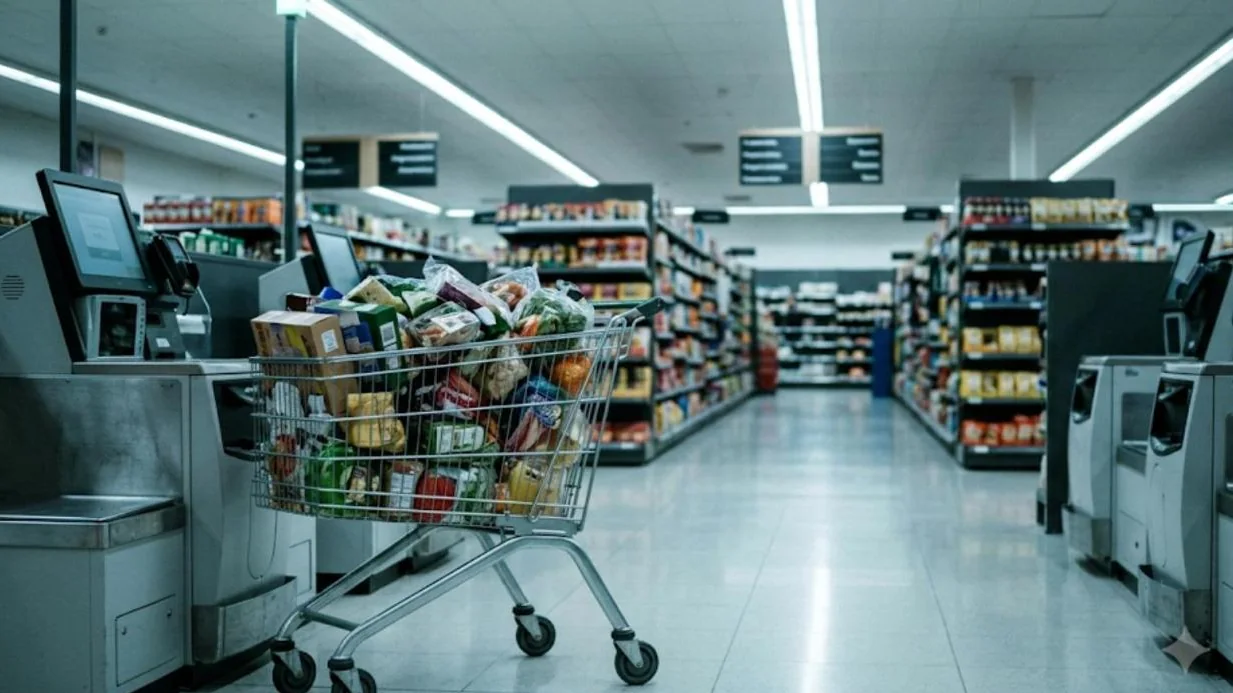
Shoppers are ready to let AI fill the cart. Very few are ready to let it press “buy”.
The useful design goal, then, is an agent that does the work up to checkout and then makes the last step fast to review. That is a different product from a fully autonomous buyer, and in my opinion a better bet at present, because it matches what the surveyed consumers say they will accept.
It also matches a design rule I apply in other agent systems. An agent can do a great deal of work, then stop at a point where a person checks it. In an advertising system I teach, the agent builds the whole campaign and a person clicks Publish. In a marketing system I built, agents spend within a set daily budget and ask above it. The line sits where an action cannot easily be undone.
Two metrics, tracked separately
If you are building or buying a shopping agent, track two things separately:
- What it adds to the cart.
- How often people change it before they pay.
They answer different questions, and combining them hides the problem.
The first tells you whether the agent is producing useful suggestions. A larger basket is the kind of figure DoorDash reports. But a larger basket by itself does not tell you whether the shopper wanted everything in it.
The second tells you whether the agent understood the shopper. If most people accept the basket as built, the agent is learning their preferences. If many remove items or swap them, the agent is guessing, and the basket size may be flattering you.
A simple worked example
Suppose two versions of an agent both produce baskets of the same size. In the first, almost everyone pays without edits. In the second, most shoppers remove several items before paying. The basket-size metric calls them equal. The edit rate shows that the second agent is creating work for the shopper, which is the opposite of what an assistant is for.
I have invented those two cases to show the logic, and they do not describe any real product. The point is that a team looking only at basket size would not see the difference, while a team that records edits before payment would.
There is a further use for the edit rate. Each change a shopper makes is a signal. It tells the agent what it got wrong. An agent that learns from edits should see the edit rate fall over time. If it does not, the learning loop is broken.
What the review step should look like
Making the final step fast is a design problem in itself. A few principles follow from the above:
- Show the whole basket in one view, with the items the agent is least sure of marked.
- Make removal a single action.
- Explain substitutions in plain words, so the shopper does not have to guess why an item changed.
- Keep the total visible.
- Record every change, so the second metric exists.
None of this is technically hard. It requires deciding that the review is part of the product, not a hurdle in front of it.
Why this extends beyond groceries
The pattern applies wherever an agent acts with someone else’s money or reputation. Procurement, travel booking, expense filing and ad buying all have a step where the agent could finish alone but where the owner of the outcome would like to look. The consumer survey is useful because it tells you where that line sits for ordinary people, and I would expect it to move only as the agent earns trust through a record of baskets people accepted.
Would you let an AI agent place your weekly grocery order without checking it first?